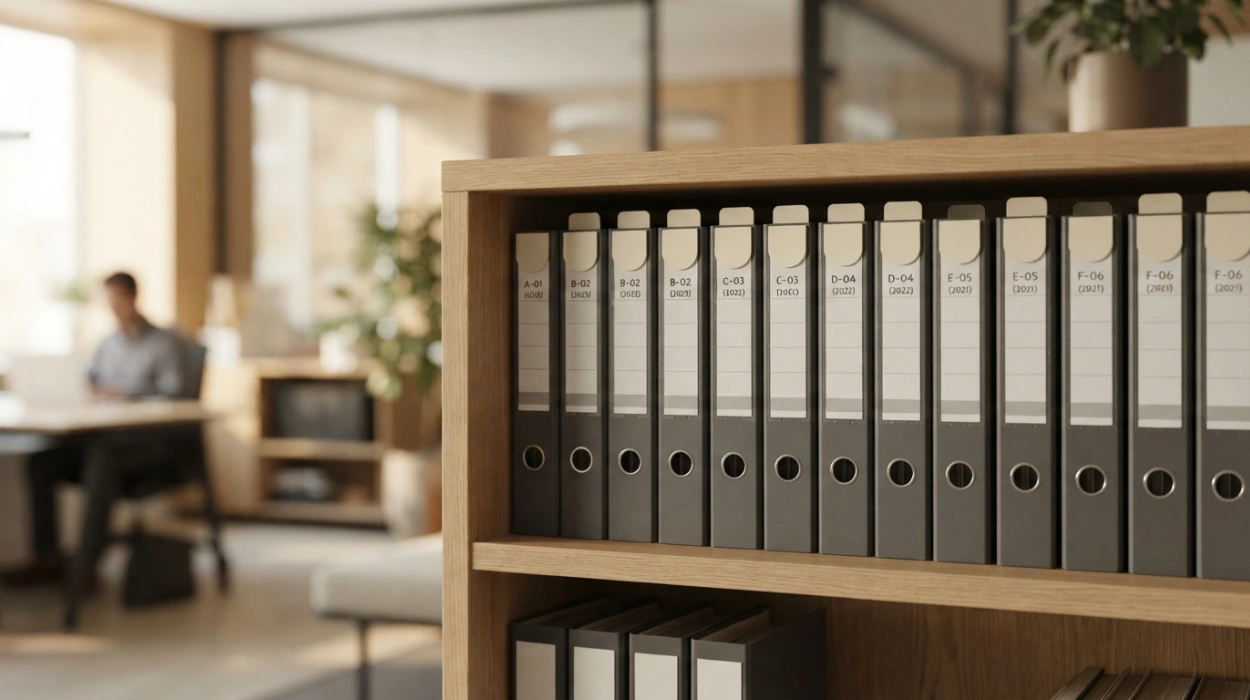
The best way to organise your company records is to combine a secure cloud repository with a physically bound statutory register, separating digital filing systems by corporate function while maintaining strict compliance with UK Companies House regulations.
Maintaining an orderly corporate filing system protects UK businesses from legal penalties and operational inefficiency. 82% of corporate compliance failures stem from misplaced documentation rather than intentional fraud. Modern UK companies require dual management strategies to safeguard corporate identity data. Regulatory bodies mandate specific retention periods for statutory registers, accounting records, and meeting minutes. Implementing a structured organisational framework eliminates retrieval delays during HMRC audits or banking verifications. Directors must establish clear categorization protocols for all incoming corporate data. Three primary document categories exist: statutory registers, financial accounts, and operational contracts. Proper categorisation ensures rapid access for auditors and stakeholders.
Why Is Digital Document Storage Essential for Modern Businesses?
Digital document storage is essential because it enables instant file retrieval, remote access for authorized directors, and automated data backups that prevent catastrophic data loss.
Cloud repositories transform how corporations manage day-to-day administrative burdens. 74% of UK remote-working directors rely on cloud platforms to review real-time financial statements. Digital tools eliminate physical storage costs and reduce document damage risks. Cybersecurity protocols protect sensitive shareholder data through multi-factor authentication and role-based permissions. Businesses utilise specialized Supplementary Company Documents platforms to maintain compliance with digital filing mandates. Encrypted servers store shareholder certificates, director appointment notices, and corporate resolutions safely. Automated version control tracks every document modification made by internal teams or external accountants. Cloud infrastructure integrates seamlessly with modern accounting software to streamline tax reporting.
How Should Physical Statutory Registers Be Maintained?
Physical statutory registers should be maintained inside a secure, leather-bound corporate folder that centralises all mandatory paper certificates, share transfers, and wet-ink signed resolutions.
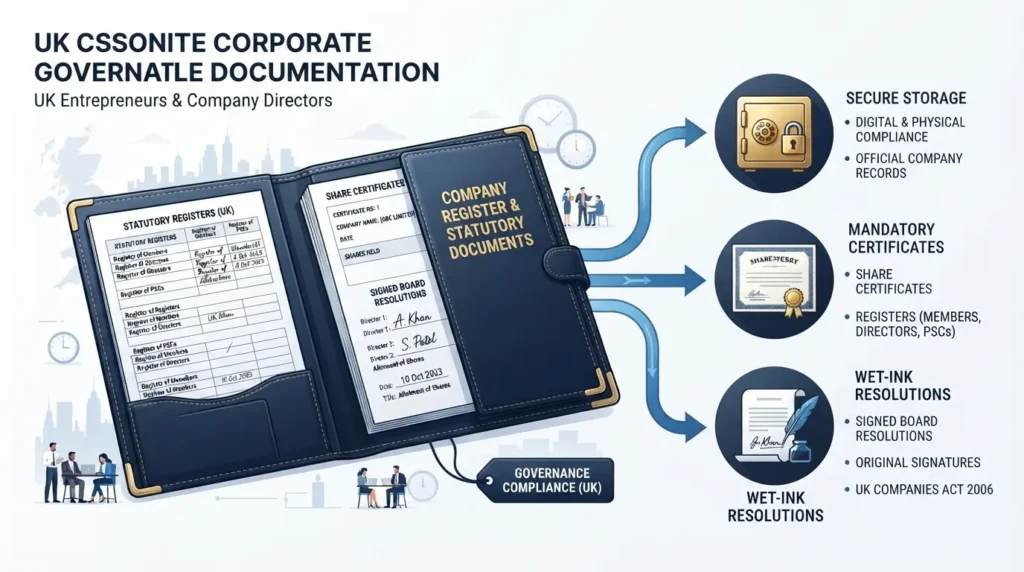
Statutory compliance requires physical oversight alongside digital archives for specific corporate instruments. 59% of corporate litigation involves challenges regarding historical share allotments or unrecorded director resignations. Leather-bound folders provide physical durability and present a professional standard during board meetings. Businesses establish clear protocols to How to Keep Your Statutory Documents Safe and Accessible within secure office safes. Each physical binder contains pre-printed register pages for members, directors, and charges. Secretaries record share transfers immediately upon board approval to maintain legal accuracy. Physical security measures restrict folder access exclusively to nominated company officers.
What Are the Core Categories of Corporate Records You Need to File?
The core categories of corporate records you need to file include statutory books, financial accounts, tax computations, and operational governance documents.
Comprehensive record management covers four distinct operational pillars defined by UK corporate law. 91% of audited corporations maintain distinct physical archives for historical minutes spanning at least 10 years. Statutory books track company ownership, board resolutions, and register changes. Financial records include bank statements, invoices, and payroll summaries required for corporation tax assessments. Governance documents contain articles of association, incorporation certificates, and trademark registrations. Administrative teams sort these records into distinct digital folders and physical binders. Clear file naming conventions accelerate retrieval during regulatory inspections by government authorities.
How Can Form My Company Streamline Your Record-Keeping Strategy?
Form My Company streamlines your record-keeping strategy by providing professionally formatted digital templates, secure cloud architectures, and physical filing supplies.
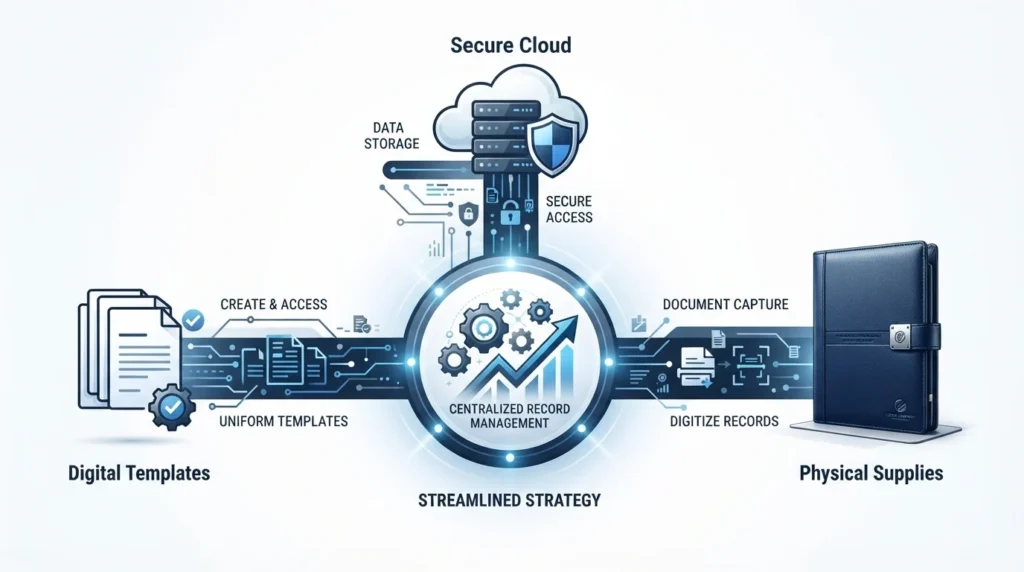
Corporate efficiency depends on utilizing expert-backed administrative frameworks from inception. 68% of new UK founders struggle with initial statutory register setup without professional assistance. Structured filing kits eliminate administrative guesswork and ensure strict adherence to Companies House guidelines. Directors can Order a Bound Company Folder Today From Form My Company to secure their physical statutory registers professionally. Form My Company delivers customized corporate kits featuring pre-printed register sheets and durable binding materials. Expert support teams assist businesses in establishing robust document retention schedules. Standardised templates reduce administrative errors during share issuance and director updates.
Organising company records requires a disciplined balance of digital security and physical preservation. Implementing structured categorisation protocols protects UK businesses from regulatory penalties and compliance breaches. Form My Company delivers the essential tools, physical folders, and digital solutions required for seamless corporate governance. Maintaining meticulous records safeguards business continuity and ensures absolute transparency for stakeholders.
Explore More Supplementary Company Documents Guide,
What Is Consular Legalisation for Non-Hague Convention Countries?
When Does a Document Need Embassy Attestation as Well as an Apostille?
Frequently Asked Questions
What are supplementary company documents in the UK?
Supplementary company documents are essential records beyond the initial certificate of incorporation that track ongoing corporate changes. These records typically include registers of directors, shareholders, and significant controllers, as well as share certificates and minutes of board meetings. Form My Company provides professional supplementary company documents to help businesses maintain full legal compliance with UK corporate regulations.
Why do UK businesses need a physical company register folder?
UK businesses need a physical company register folder to safely store statutory registers, wet-ink signed resolutions, and share certificates in one centralised location. Maintaining a physical binder complements digital backups and provides a professional standard during board meetings or regulatory inspections. Form My Company supplies durable, leather-bound folders designed to protect these vital statutory instruments.
Are UK companies legally required to keep statutory registers?
Yes, UK companies are legally required by the Companies Act 2006 to maintain up-to-date statutory registers detailing their directors, secretaries, shareholders, and charges. These registers must be kept at the company’s registered office or a designated single inspection location available for public or official review. Using structured Supplementary Company Documents ensures businesses meet these statutory maintenance obligations accurately.
How do you update company registers when shares are transferred?
Updating company registers during a share transfer involves recording the transaction in the register of members, issuing new share certificates, and notifying Companies House via the annual confirmation statement. Directors must approve the transfer formally and update the company’s internal books immediately to reflect the new ownership structure. Form My Company offers specialized guidance and supplementary paperwork to streamline share transfers for UK directors.
Where should a company store its statutory books and records?
A company must store its statutory books at its registered office address or a Single Alternative Inspection Location (SAIL) registered with Companies House. Many businesses combine secure digital cloud storage for day-to-day administration with physical binders obtained through Form My Company to keep their Supplementary Company Documents secure and accessible.