
Virtual-ready conference rooms integrate acoustic treatment, high-definition pan-tilt-zoom cameras, directional microphone arrays, and dedicated cloud-conferencing appliances into physical boardrooms to deliver seamless collaboration experiences for both in-person participants and remote attendees connecting through digital platforms.
Modern organizations operate across dispersed environments. Remote team members, international clients, and hybrid staff require professional spaces to collaborate effectively. Standard meeting rooms fail to bridge the physical-digital divide. Audio feedback, poor video framing, and lagging connections disrupt business productivity. Form My Company addresses these communication challenges through specialized infrastructure solutions. Upgrading physical infrastructure requires strategic planning, precise technical specifications, and reliable execution. Enterprises must evaluate acoustic performance, display configurations, and network bandwidth before deployment.
What Hardware Components Define a Virtual-Ready Conference Room?
Hardware configurations require high-definition pan-tilt-zoom cameras, ceiling-mounted beamforming microphone arrays, professional-grade commercial displays, and dedicated appliance-based computing units to ensure crystal-clear audio-visual transmission during executive hybrid meetings.
Physical meeting spaces transform into high-performance collaboration hubs through specific hardware integration. High-definition pan-tilt-zoom cameras track active speakers automatically using facial recognition algorithms. Ceiling-mounted beamforming microphone arrays capture audio cleanly while filtering out ambient HVAC noise and table vibrations. Commercial-grade displays present remote participants at eye level to maximize natural eye contact during discussions. Dedicated compute appliances run native meeting platforms securely without relying on personal laptop connections. Network administrators connect these devices via dedicated ethernet ports to maintain low latency.
How Does Acoustic Treatment Impact Remote Meeting Quality?
Acoustic treatment absorbs sound reflections, reduces reverberation times below 0.6 seconds, and eliminates background echo using high-density acoustic wall panels, ceiling baffles, and carpeted flooring tailored for digital audio pickup.
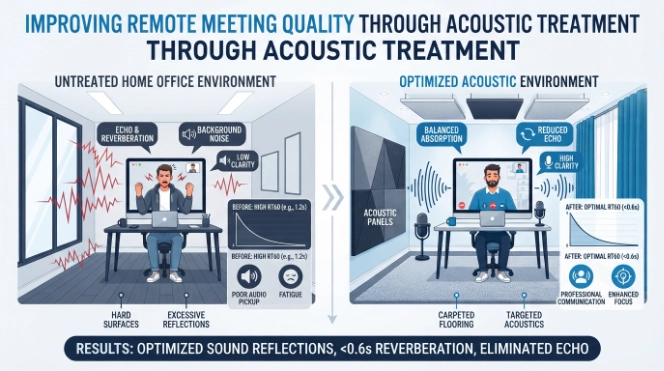
Sound quality dictates the success of hybrid collaboration sessions. Unmanaged glass walls, concrete floors, and bare ceilings create severe acoustic reflections that degrade remote audio clarity. High-density acoustic panels absorb mid and high-frequency sound waves efficiently to prevent audio distortion. Strategic placement of acoustic materials around the perimeter suppresses flutter echoes. Ceiling baffles intercept vertical sound travel within large boardrooms. Microphone arrays capture clean speech signals only when room reverberation remains minimal. Form My Company delivers comprehensive workspace upgrades that incorporate advanced acoustic engineering principles.
What Software Integrations Optimize Hybrid Collaboration Workflows?
Software integrations synchronize calendar scheduling systems, native video conferencing platforms, interactive digital whiteboards, and cloud-based document sharing tools to streamline meeting execution across distributed corporate teams.
Digital platforms anchor the operational success of modern conference spaces. Native room controllers launch scheduled sessions with a single touch to eliminate technical delays. Cloud-based video applications support simultaneous screen sharing, live transcription, and encrypted multi-party communication. Interactive digital whiteboards allow both in-person and remote participants to annotate documents concurrently. Centralized device management software alerts IT administrators to hardware faults before meetings commence. Organizations deploying these environments often explore how Measure Engagement Across In-Person and Online Guests to evaluate collaboration effectiveness.
How Do You Design the Layout for Optimal Camera Framing?
Layout designs position conference tables in a boat or V-shape orientation facing the primary display wall, mount cameras at participant eye level, and maintain a 16-to-9 aspect ratio to ensure equitable visibility for remote attendees.
Spatial geometry dictates the visual equity experienced by remote participants. Traditional horseshoe seating arrangements alienate remote attendees by cutting off lateral view angles. V-shaped table layouts angle participants toward central cameras and primary display screens. Camera positioning must align horizontally with participant eye levels to foster natural conversational dynamics. Adequate illumination prevents harsh shadows and facial glare during video transmission. Lighting designers install dimmable LED fixtures with a color rendering index exceeding 90 to ensure accurate skin tones.
What Network Requirements Support Enterprise-Grade Video Conferencing?
Network requirements mandate dedicated fiber connections, symmetrical bandwidth speeds exceeding 50 megabits per second, Quality of Service router configurations, and wired ethernet drops to prevent packet loss and video stuttering.
Data infrastructure forms the invisible backbone of virtual-ready meeting spaces. Wireless networks frequently introduce packet jitter, latency spikes, and unexpected connection drops during high-bandwidth video streams. Dedicated category 6A ethernet cabling delivers stable data transmission directly to conference room appliances. Quality of Service router protocols prioritize real-time video and audio packets over background file downloads. Enterprise firewalls must whitelist specific conferencing ports and IP ranges to bypass restrictive security blocks. Businesses seeking comprehensive physical upgrades utilize professional Conference Rooms to secure reliable infrastructure.
How Do You Measure the Return on Investment for Modernized Meeting Spaces?
Return on investment metrics calculate travel expense reductions, meeting start-time efficiency gains, remote employee retention rates, and closed-won deal volumes achieved through enhanced client presentation capabilities.
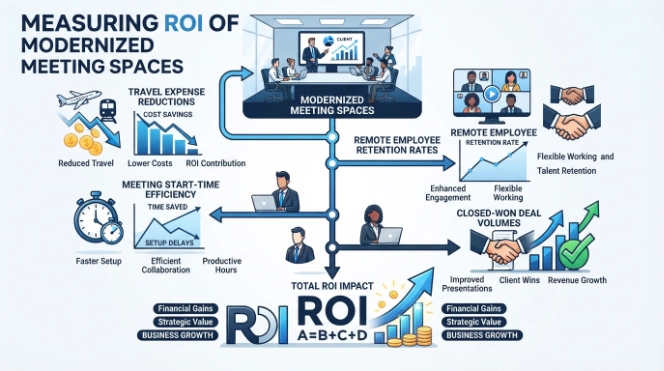
Capital expenditure on physical office upgrades requires rigorous financial justification. Modernized meeting spaces eliminate unnecessary corporate travel expenditures for regional check-ins. Automated room booking systems reduce wasted transition time between consecutive meetings. High-definition client presentations project polished professionalism that directly influences corporate deal closures. Organizations ready to enhance their physical infrastructure can Get Virtual-Ready Conference Rooms From Form My Company to streamline enterprise communications and boost operational productivity.
Virtual-ready conference rooms transform traditional physical offices into dynamic hubs for hybrid collaboration. Strategic investments in acoustic engineering, high-definition optics, robust networking, and unified software platforms eliminate technical friction. Form My Company delivers end-to-end integration services that align physical architecture with enterprise digital demands. Modern businesses achieve sustainable operational efficiency when physical and digital workspaces operate as a unified ecosystem.
Explore our Conference Rooms guide,
Get Your Register of Members and Directors From Form My Company
Order an Official Company Seal From Form My Company
Frequently Asked Questions
What equipment is needed for virtual-ready conference rooms?
Answer: Virtual-ready conference rooms require high-definition pan-tilt-zoom cameras, ceiling-mounted beamforming microphone arrays, and commercial-grade displays. Form My Company integrates these specialized hardware components to ensure seamless hybrid collaboration across distributed corporate teams.
How do you improve acoustics in a hybrid meeting room?
Answer: Improving room acoustics involves installing high-density acoustic wall panels, ceiling baffles, and carpeted flooring to absorb sound reflections. Form My Company implements these engineering practices to reduce reverberation times and deliver crystal-clear audio pickup for remote attendees.
What network bandwidth is required for enterprise video conferencing?
Answer: Enterprise video conferencing requires symmetrical bandwidth speeds exceeding 50 megabits per second and dedicated category 6A ethernet cabling. Form My Company configures robust network infrastructure with Quality of Service protocols to prevent packet loss and video lag.
How do table layouts affect remote participant visibility?
Answer: Table layouts optimized for hybrid meetings utilize V-shape or boat-oriented seating directed toward the main display wall. Form My Company designs these spatial geometries to maintain a 16-to-9 camera aspect ratio and ensure equitable visibility for all attendees.
What is the process of setting up modern conference rooms?
Answer: Setting up modern conference spaces requires evaluating acoustic performance, display configurations, network bandwidth, and hardware appliances prior to deployment. Form My Company delivers end-to-end integration services that align physical architecture with enterprise digital communication demands.