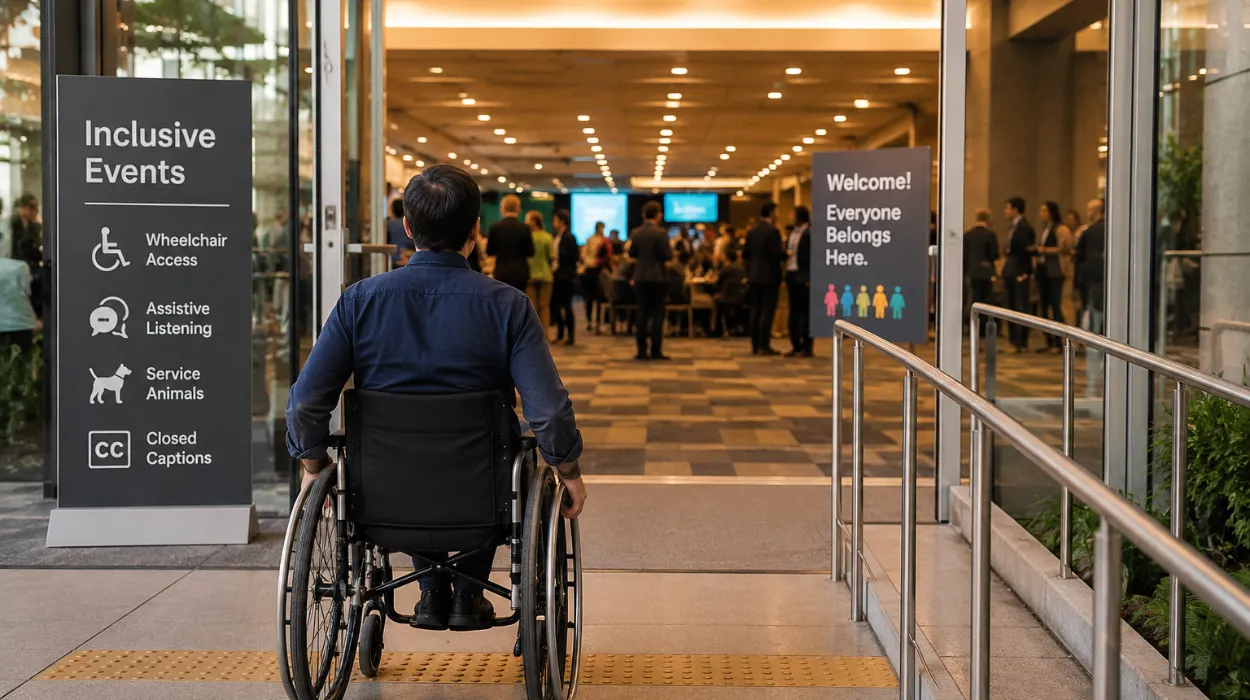
Venue accessibility matters because it ensures compliance with the Equality Act 2010, eliminates physical barriers for 14.1 million disabled people in the UK, and maximizes professional participation across all corporate gatherings, stakeholder meetings, and industry conferences.
Venue accessibility represents a core pillar of modern corporate operations. Event organizers face strict legal obligations and rising ethical expectations to accommodate every attendee. When spaces lack fundamental modifications like ramps, lifts, and induction loops, businesses exclude vital participants. Inclusive spaces foster collaboration, boost morale, and drive organizational success.
What Are the Legal Requirements for Venue Accessibility in the UK?
UK legislation mandates that all service providers make reasonable adjustments under the Equality Act 2010, requiring physical modifications, digital accommodations, and equitable access for disabled employees, clients, and event delegates.
The Equality Act 2010 requires organizations to anticipate the needs of disabled individuals. Service providers cannot wait for a request to provide auxiliary aids or physical adjustments. Failure to implement these changes exposes companies to discrimination claims and reputational damage. Compliance protects enterprises from legal penalties while establishing a standard of fairness. Building owners must evaluate entryways, corridors, and amenities against established standards. Architectural audits identify structural deficits before events occur. Businesses review emergency evacuation plans to ensure wheelchair users exit safely. Local authorities enforce building regulations that dictate minimum corridor widths and door clearances. Legal frameworks demand proactive compliance rather than reactive adjustments. Organizations partner with specialized providers to secure fully compliant Conference Rooms that meet statutory standards without administrative delays.
How Does Venue Accessibility Drive Business Growth and Brand Reputation?
Accessible venues expand target audiences by 20%, improve brand reputation among corporate clients, and demonstrate genuine commitment to diversity, equity, and inclusion across all commercial sectors.
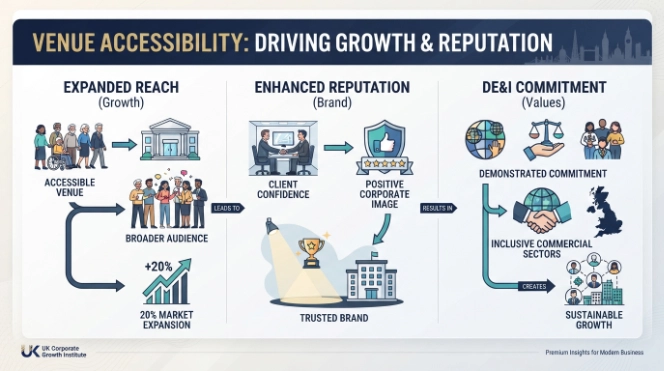
Modern consumers and corporate partners prioritize ethical alignment when selecting venues and service providers. Companies that champion inclusivity capture broader market segments and foster stronger client loyalty. Brand reputation improves when event organizers demonstrate tangible respect for diverse attendee needs. Inclusive environments attract high-profile speakers and international delegates who require specialized facilities. Media coverage frequently highlights organizations that champion universal design and barrier-free events. Corporate social responsibility reports highlight accessibility metrics to satisfy institutional investors. Businesses gain competitive advantages by positioning themselves as forward-thinking leaders in commercial hospitality. Strategic venue selection transforms accessibility from a regulatory obligation into a powerful commercial differentiator.
What Physical Features Define a Truly Accessible Event Space?
Truly accessible event spaces feature stepless primary entrances, automatic doors with a minimum clearance of 850 millimeters, passenger lifts with tactile floor indicators, and fully compliant accessible restrooms located on the same level.
Physical infrastructure dictates whether attendees can navigate a venue independently. Architectural design must account for individuals with mobility impairments, visual limitations, and sensory sensitivities. Doorways require adequate width to accommodate motorized wheelchairs and mobility scooters. Main thoroughfares demand smooth, non-slip flooring materials that prevent slips and trips. Ramps must maintain a gradient of 1 in 12 or flatter to ensure safe independent ascent. Handrails require installation on both sides of staircases and ramps at standardized heights. Reception desks must feature lowered sections to welcome wheelchair users effectively. Signage requires high-contrast typography and Braille markings for visually impaired delegates. Lighting systems need glare-free coverage to assist individuals with low vision. Acoustic management reduces background noise for attendees utilizing hearing aids.
How Do Sensory and Cognitive Accommodations Enhance Event Inclusion?
Sensory and cognitive accommodations include designated quiet rooms, sign language interpreters, live captioning systems, and clear visual wayfinding signage that supports neurodivergent and sensory-sensitive participants.
Inclusive event planning extends far beyond wheelchair ramps and physical elevators. Neurodivergent attendees require environments that minimize sensory overload and cognitive fatigue. Organizers deploy live captioning software on presentation screens to assist delegates with hearing loss. British Sign Language interpreters translate keynote speeches for deaf attendees in real-time. Quiet zones offer peaceful spaces for individuals experiencing sensory processing differences. Digital event guides utilize plain English and intuitive layouts to assist cognitive comprehension. Staff members receive disability awareness training to support attendees with hidden disabilities. Catering teams provide clearly labeled menus detailing allergen information and dietary options. These holistic measures ensure every participant experiences events with dignity and comfort. Comprehensive guidance on evaluating these factors is detailed in our guide on How to Choose an Accessible Conference Venue That Meets UK Law.
How Can Event Organizers Ensure Seamless Accessibility Implementation?
Event organizers ensure seamless implementation by conducting pre-event venue site audits, dispatching detailed accessibility questionnaires to attendees, and collaborating directly with specialized venue management teams.
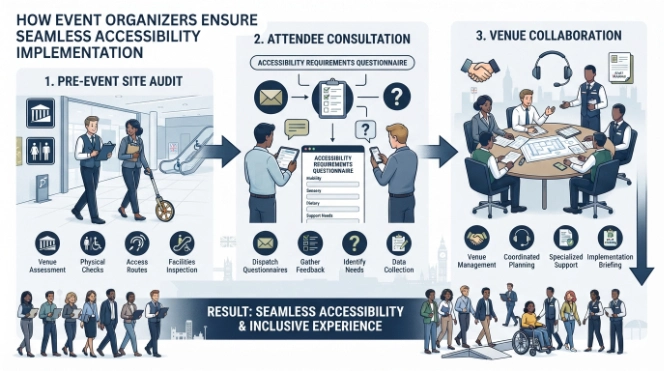
Proactive planning eliminates logistical failures on the day of the event. Organizers must walk the venue footprint to test elevators, inspect restrooms, and measure door clearances personally. Pre-registration forms should ask attendees about specific mobility, dietary, or sensory requirements weeks in advance. Venue staff must complete briefing sessions regarding emergency evacuation protocols for disabled guests. Technical teams test audio induction loops and streaming captions prior to the commencement of keynote presentations. Event signage requires strategic placement at eye level to guide attendees without confusion. Feedback collection forms distributed post-event measure accessibility success and highlight areas for improvement. Businesses seeking streamlined planning processes often utilize expert resources like Book Accessible Conference Rooms With Form My Company to secure vetted, fully equipped spaces without friction.
Venue accessibility remains an essential operational priority for inclusive events. Organizations must bridge the gap between legal mandates and exceptional attendee experiences by prioritizing physical, sensory, and digital accommodations. Strategic venue selection removes participation barriers, drives corporate growth, and safeguards brand reputation across all business sectors. Form My Company delivers meticulously vetted solutions that empower enterprises to host seamless, fully compliant gatherings.
Explore our Conference Rooms guide,
How Do You Know If Someone Qualifies as a PSC?
What Happens If You Fail to Keep a Statutory Register?
Frequently Asked Questions
What features make conference rooms fully accessible for corporate events?
Fully accessible conference rooms feature step-free entryways, automatic sliding doors, integrated audio induction loops, and wheelchair-accessible podiums. Form My Company equips these spaces with compliant facilities to ensure seamless participation for all delegates.
How do I book accessible conference rooms through Form My Company?
Clients can book accessible conference rooms by visiting the Form My Company service portal and filtering venue options based on specific physical and sensory requirements. The platform provides transparent details regarding lift dimensions, restroom layouts, and nearby public transport links.
Are conference rooms required to comply with UK disability laws?
UK legislation mandates that all commercial venues and conference rooms make reasonable adjustments under the Equality Act 2010 to accommodate disabled attendees. Form My Company ensures businesses secure compliant spaces that eliminate physical barriers and prevent legal liability.
What is the typical hourly or daily rental cost for professional conference rooms?
Rental rates for professional conference rooms vary depending on capacity, geographic location, and included AV technology equipment. Form My Company offers transparent pricing models designed to suit diverse corporate budgets without compromising on accessibility standards.
Can conference rooms accommodate hybrid meetings and virtual attendees?
Modern conference rooms feature high-definition video conferencing equipment, boundary microphones, and high-speed fiber internet connections to support hybrid collaboration. Form My Company integrates these technical specifications to ensure seamless communication between in-person and remote participants.