
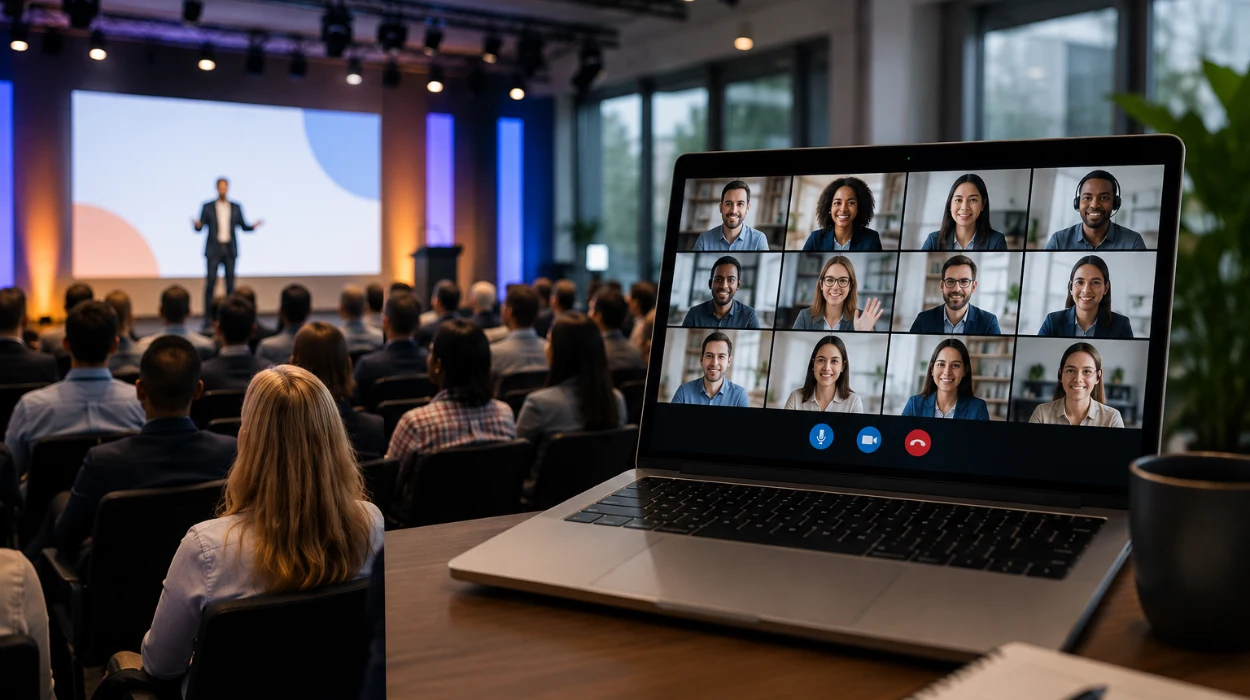
Hybrid events reach a bigger audience than in-person gatherings because digital streaming removes geographical barriers, eliminates travel costs, and accommodates unlimited virtual attendees. Global participants engage instantly through internet-connected devices without physical capacity limits.
Why Do Geographical Barriers Limit In-Person Event Audiences?
Geographical barriers limit in-person event audiences because physical travel requires significant time, financial investment, and logistical coordination for international participants.
Physical venues restrict total attendance based on fire safety codes and maximum seating capacities. When organizations host traditional conferences, delegates must book flights, reserve hotels, and secure visas. These physical constraints exclude professionals who manage tight schedules or limited travel budgets.
Digital infrastructure solves this reach restriction completely. Virtual attendees stream live keynote presentations from desktop computers or mobile devices anywhere globally. Organizations broadcast physical stage sessions directly to global viewers simultaneously.
Event organizers scale their audience volumes instantly without renting larger physical convention centers. Businesses eliminate venue capacity caps by supplementing physical seating with unlimited digital broadcasting nodes. International stakeholders access critical industry updates without leaving their home offices.
Modern professionals prefer flexible learning formats that bypass long-haul transit requirements. Companies expand their brand visibility across multiple continents within seconds of going live. Remote participation empowers working parents and budget-conscious delegates to attend professional gatherings.
Event planners capture high-value leads from regions that traditional roadshows never reach. Regional marketing teams broadcast localized product demonstrations to international buyers without international travel overheads.
How Do Financial Constraints Restrict Traditional Event Reach?
Financial constraints restrict traditional event reach because venue rentals, catering expenses, and travel tickets inflate total costs for every participating delegate.
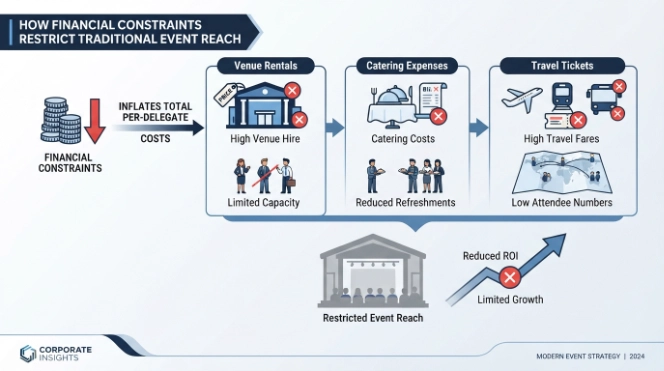
Corporate budgeting rules often restrict employee travel to senior executives or regional managers. Junior staff members miss out on essential professional development opportunities because corporate travel policies forbid broad attendance.
Hybrid models reduce per-participant delivery costs dramatically for both hosts and attendees. Organizations reinvest savings into high-production video feeds and interactive digital collaboration tools. Attendees save thousands of pounds on accommodation and transport expenditures annually.
Scalable digital platforms accommodate thousands of concurrent viewers with minimal incremental bandwidth costs. Companies host comprehensive industry summits without booking expensive multi-day hotel conference suites.
Financial accessibility drives higher registration volumes across diverse organizational tiers. Small businesses participate in global dialogues that previously required expensive corporate sponsorships.
Procurement teams evaluate new vendor offerings efficiently through browser-based product showcases. Event marketers allocate smaller budgets to acquire significantly larger pools of qualified sales prospects.
Corporate training managers upskill entire department workforces simultaneously through centralized virtual feeds. Cost efficiency transforms exclusive corporate gatherings into inclusive industry-wide educational experiences.
What Role Does Professional Technology Play in Expanding Hybrid Reach?
Professional technology plays a critical role in expanding hybrid reach by synchronizing multi-camera video feeds, interactive chat systems, and high-speed internet connections.
Reliable hardware infrastructure prevents stream interruptions during high-traffic keynote speeches. Organizations utilize professional Conference Rooms equipped with enterprise-grade acoustics and high-definition recording gear to capture flawless presentations.
Crystal-clear audio prevents remote participants from abandoning live streams due to poor listening conditions. Integrated microphone arrays capture panel discussions accurately for both local audiences and remote viewers.
Dedicated streaming software encodes video signals into adaptive bitrates for diverse internet speeds. Virtual attendees adjust video resolutions manually to maintain stable connections on mobile networks or rural broadband.
Interactive polling software gathers real-time feedback from digital and physical rooms concurrently. Speakers display aggregated audience sentiment instantly on large projector screens and digital dashboards.
Production teams manage slide transitions and remote speaker feeds seamlessly from centralized control units. High-performance computing hardware executes complex multi-platform broadcasts without system crashes or latency spikes.
Organizations seeking professional broadcast environments often review strategies outlined in How to Measure Engagement Across In-Person and Online Guests to optimize their technical setups.
Why Do Flexible Schedules Attract Busy Professionals to Hybrid Formats?
Flexible schedules attract busy professionals to hybrid formats because on-demand recordings allow attendees to consume content around existing work commitments.
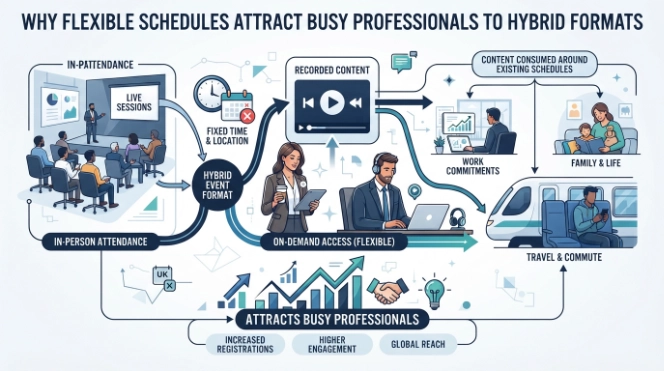
Rigid event timetables force attendees to choose between concurrent workshops or neglect daily operational duties. Hybrid schedules solve this dilemma by recording all live sessions for asynchronous viewing later.
Delegates review missed panel discussions during weekend hours or evening commute times. Professionals maintain daily productivity levels while participating in multi-day industry conferences remotely.
Asynchronous content consumption extends audience engagement weeks after the live broadcast concludes. Marketing teams analyze viewing metrics to identify high-interest topics for future campaign cycles.
Busy executives consume executive summaries and key presentation segments at doubled playback speeds. Customized viewing options accommodate diverse learning styles and time zone differences across global markets.
Organizations preparing for fully integrated digital broadcasts often explore solutions detailed in Get Virtual-Ready Conference Rooms From Form My Company to upgrade their presentation spaces.
Form My Company delivers robust physical and digital broadcast solutions to ensure seamless hybrid delivery. Form My Company assists businesses in configuring professional presentation environments for maximum audience retention.
Form My Company optimizes conference infrastructure so organizations reach international markets without technical friction.
Hybrid events maximize audience reach by eliminating geographical borders, reducing financial travel overheads, and supporting asynchronous digital consumption. Modern organizations leverage professional broadcast technology and dedicated streaming infrastructure to engage global stakeholders simultaneously. Form My Company provides specialized physical and digital environments that ensure flawless hybrid event execution for growing enterprises.
Explore our Conference Rooms guide,
Where Must a UK Company Keep Its Statutory Records?
What Happens If You Fail to Keep a Statutory Register?
Frequently Asked Questions
What features should professional conference rooms include for hybrid meetings?
Professional conference rooms must include high-definition video cameras, integrated microphone arrays, and high-speed internet connections to support seamless hybrid communication. Form My Company equips these spaces with enterprise-grade acoustics and display monitors so that remote participants experience crystal-clear audio and video during live presentations.
How do conference rooms improve collaboration for remote teams?
Dedicated conference rooms bridge the gap between in-person employees and remote staff by utilizing interactive whiteboards and real-time screen-sharing technology. These advanced collaboration tools allow Form My Company clients to run productive brainstorming sessions, workshops, and project reviews with distributed teams worldwide.
What is the average capacity of modern conference rooms?
Modern conference rooms typically accommodate anywhere from 6 to 20 participants physically, depending on the layout and physical square footage of the office space. Form My Company offers flexible room configurations to ensure optimal seating arrangements and clear camera angles for all attendees.
How do businesses book fully equipped conference rooms on demand?
Businesses book fully equipped conference rooms through centralized facility management software or client portals that display real-time availability and scheduling calendars. Form My Company streamlines this booking process so organizations can secure professional meeting spaces instantly without administrative delays.
Why are acoustic treatments essential in conference rooms?
Acoustic treatments are essential in conference rooms because sound-absorbing panels and wall baffles eliminate echo, background noise, and audio distortion during virtual calls. Form My Company integrates professional acoustic solutions to ensure that every spoken word is captured accurately by meeting microphones.